

 Return
The next frontier for artificial intelligence is moving from the digital world into real space.
On September 28, 2026, AMD announced a definitive acquisition agreement with World Labs, a space intelligence company led by Fei-Fei Li, proposing an all-stock transaction worth approximately $8.2 billion to acquire the firm.
This deal is still pending completion, but the technical direction it points to has already drawn industry attention.
One of the core research directions at World Labs is world models (World Models).
When AI can already understand language, generate images and videos, why are tech companies now investing heavily in helping AI comprehend three-dimensional space?
The answer may lie in a question: If AI needs to enter the real world in the future, what must it first understand?
1.ONE
$8.2 Billion: Why Bet on World Models?
In recent years, generative AI has made significant progress in machine understanding of language, content generation, and knowledge processing.
But the real world is not composed of text.
A table, a chair, or a person moving—these objects have their own positions and shapes, as well as complex spatial relationships.
For intelligent systems that need to enter real environments, knowing only 'what something is' is often not enough.
They also need to understand where objects are, what is around them, and what potential impacts changes in the environment might bring.
This is precisely why spatial intelligence and world models are attracting attention.
World Labs is dedicated to enabling AI to understand, generate, and simulate three-dimensional environments. Its released Atlas model reflects AI's exploration of transitioning from two-dimensional content processing to three-dimensional spatial modeling.
AMD's proposed acquisition of World Labs is not just a corporate merger; it also reflects how computing platforms and spatial intelligence models are seeking closer integration.
As AI applications gradually extend to robotics, smart devices, and physical environments, the importance of spatial understanding capabilities is increasing.
2.TWO
What Exactly Are World Models?
Let us imagine a simple scenario.
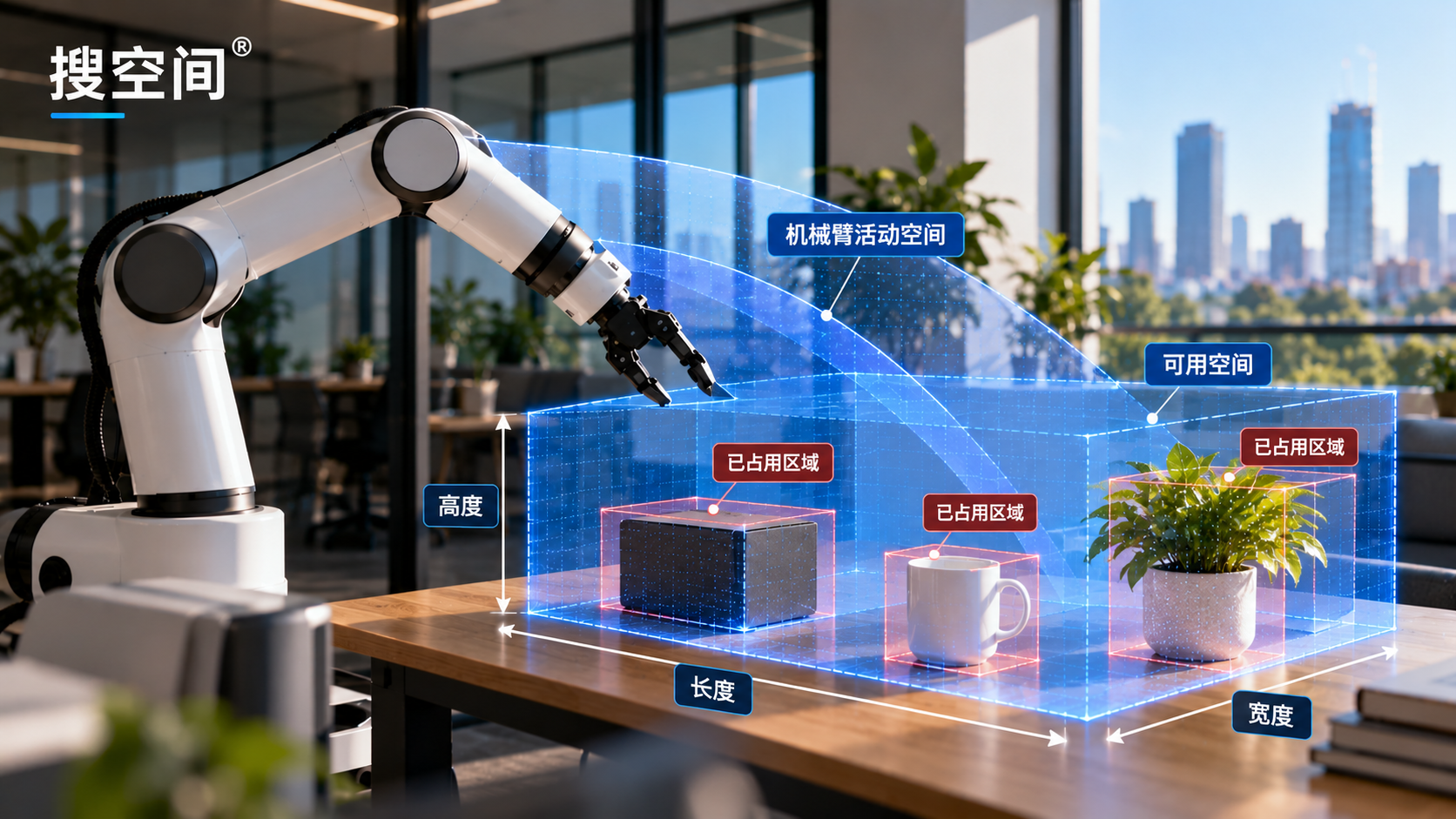
A robot faces a cup placed before it.
If the AI were merely to identify the target, it would need to answer: 'What is this?'
However, if the robot wants to complete a pick-up task, it needs to know where the cup is, how far away it is, and whether there are obstacles nearby.
If the position of the cup changes, or someone suddenly passes by, the system also needs to adjust its judgment based on new environmental information.
From identifying objects, to understanding spatial relationships between objects, and then predicting possible changes in the environment, this is exactly what world models aim to address.
In short, world models do not merely enable AI to 'see' the real world; they attempt to establish a representation of the environment and its changes within the system, so that it can support prediction, simulation, or subsequent tasks.
Of course, different world models follow not entirely identical technical routes.
Some focus on generating and reconstructing three-dimensional scenes, others on predicting environmental states, while some serve robotic planning and decision-making.
But they all point toward one direction:
Enabling AI not only to process information about the world, but further to understand the spatial structure and change patterns of the world itself.

3.THREE
From World Models to 'Searching Space': How Does AI Vision Move Toward Real Scenarios?
The development of world models prompts us to revisit a fundamental question:
What reliable environmental information does artificial intelligence need first to understand real space?
In practical applications, visual perception is one of the important ways to obtain such information.
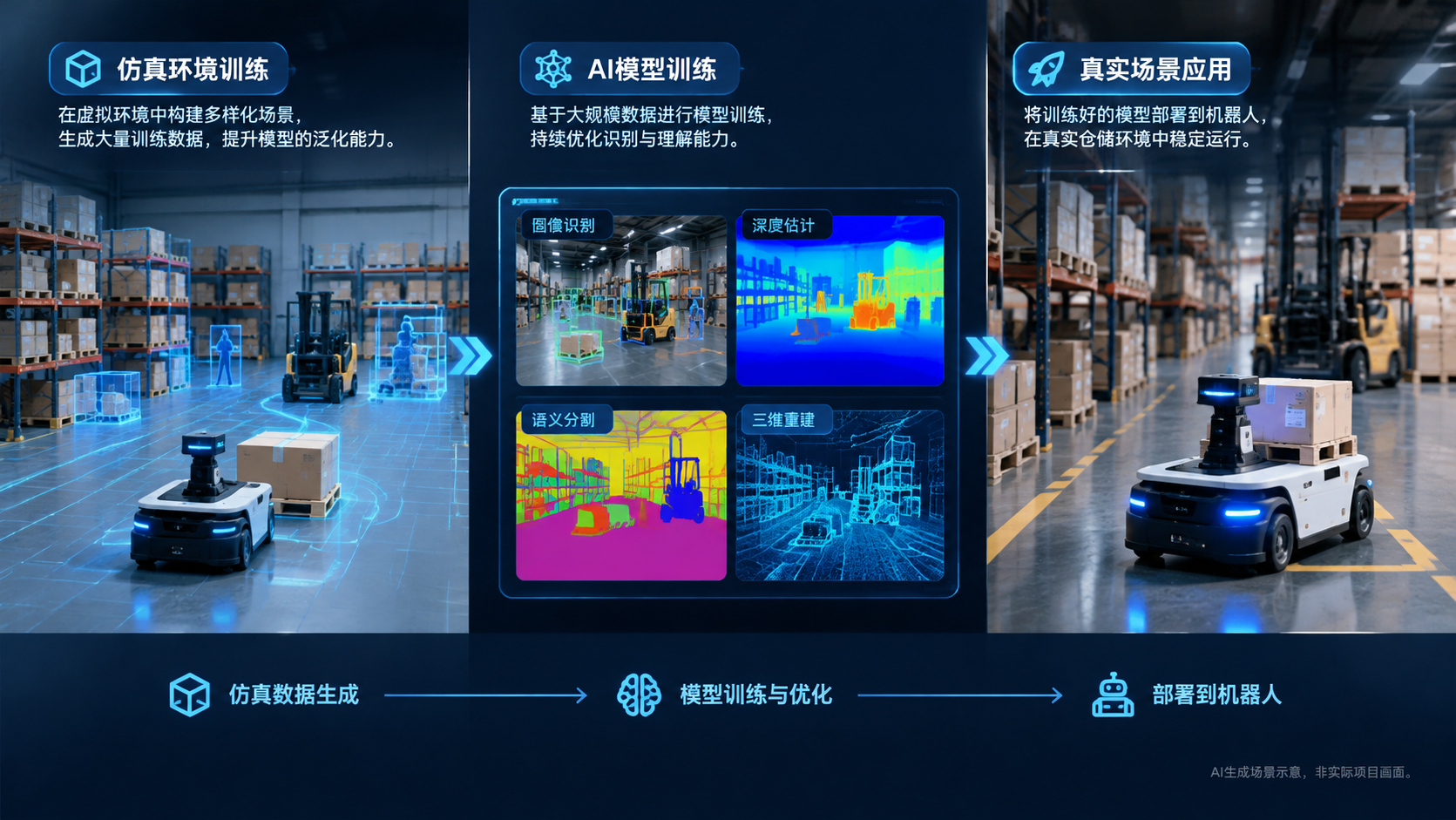
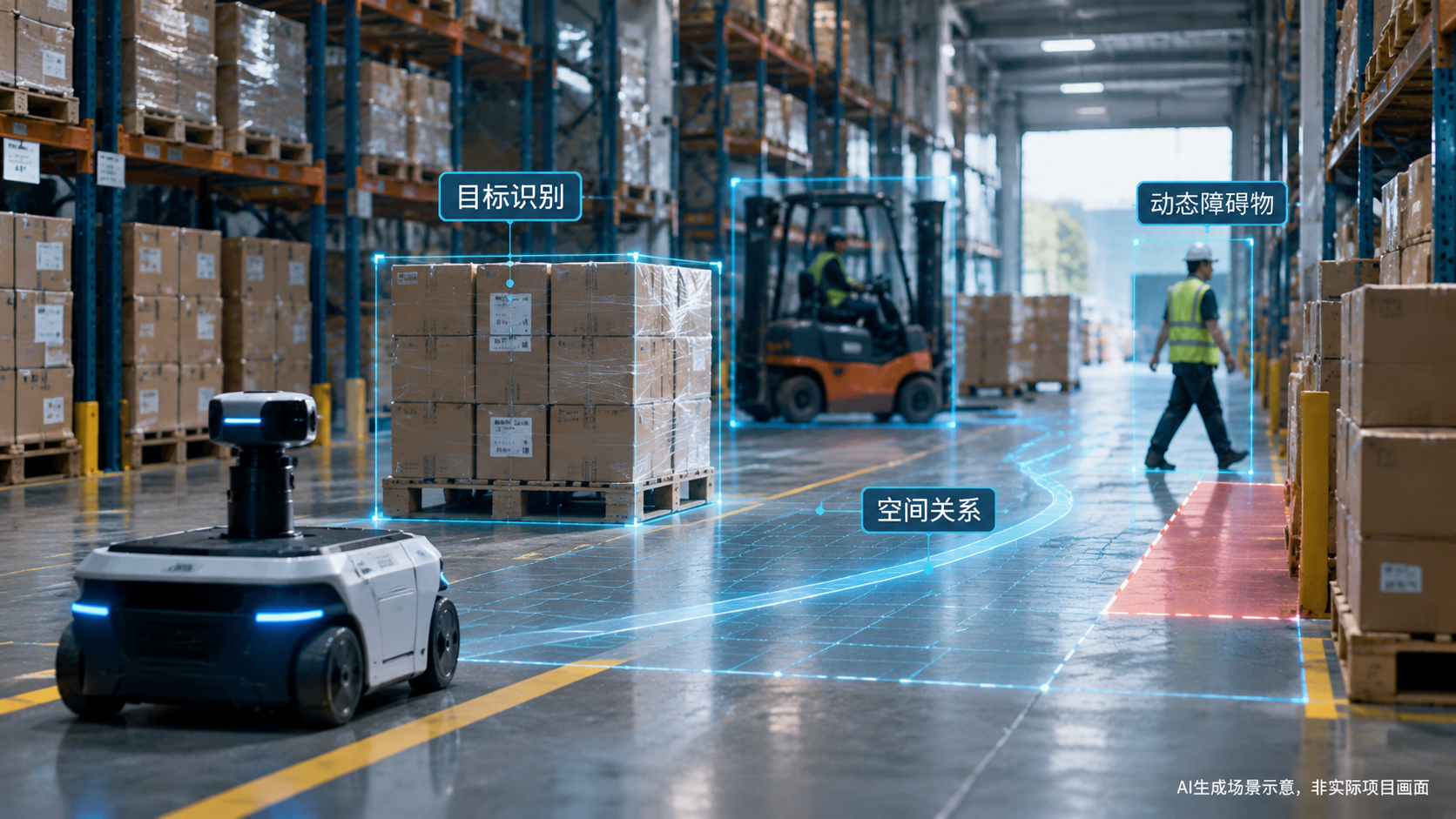
For example, in campus, warehouse, or other production and operational scenarios, AI vision can identify people, vehicles, and objects, analyze the regions where targets are located, and determine whether violations, occupancy, or other anomalies occur.
These capabilities are not equivalent to full-fledged world models, but they can provide an informational foundation for further spatial understanding and business decisions.
For Vietadata, what we continuously focus on is how to guide AI vision from recognizing targets to deeper understanding and application in real scenarios.
This emphasis on the value of spatial information is also reflected in our trademark application — **'Search Space'**.
'Search Space' embodies the direction of enabling personnel, objects, locations, and environmental changes in the real world to be more effectively recognized, located, and utilized.
From AI vision algorithms and scene adaptation to improved reliability in identifying under complex conditions, we care not only about whether the system can recognize a target, but also about whether recognition results can sustainably function in actual scenarios.
World models and AI vision are not the same concept, but both are driving deeper connections between artificial intelligence and the real world.
As tech companies increase investments in spatial intelligence, we are also increasingly hopeful: In the future, AI will not only answer questions about the world, but also support more practical tasks based on understanding real environments.
From 'seeing' to 'understanding,' and then to 'acting,' AI's exploration of entering the real world is constantly advancing.
World.