


 Return
As artificial intelligence and service robots accelerate their penetration into various scenarios, collaborative technical initiatives between enterprises and universities are making “smart services” a more tangible reality.
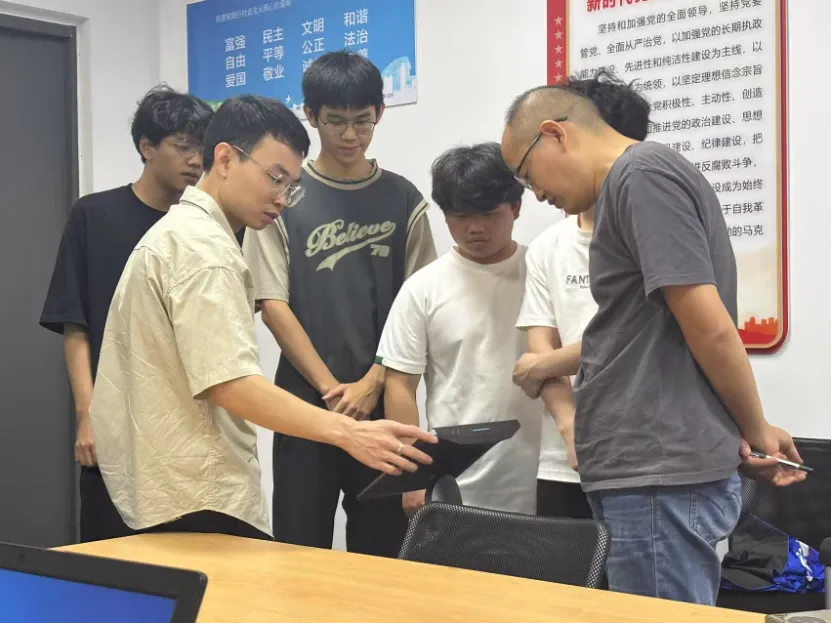
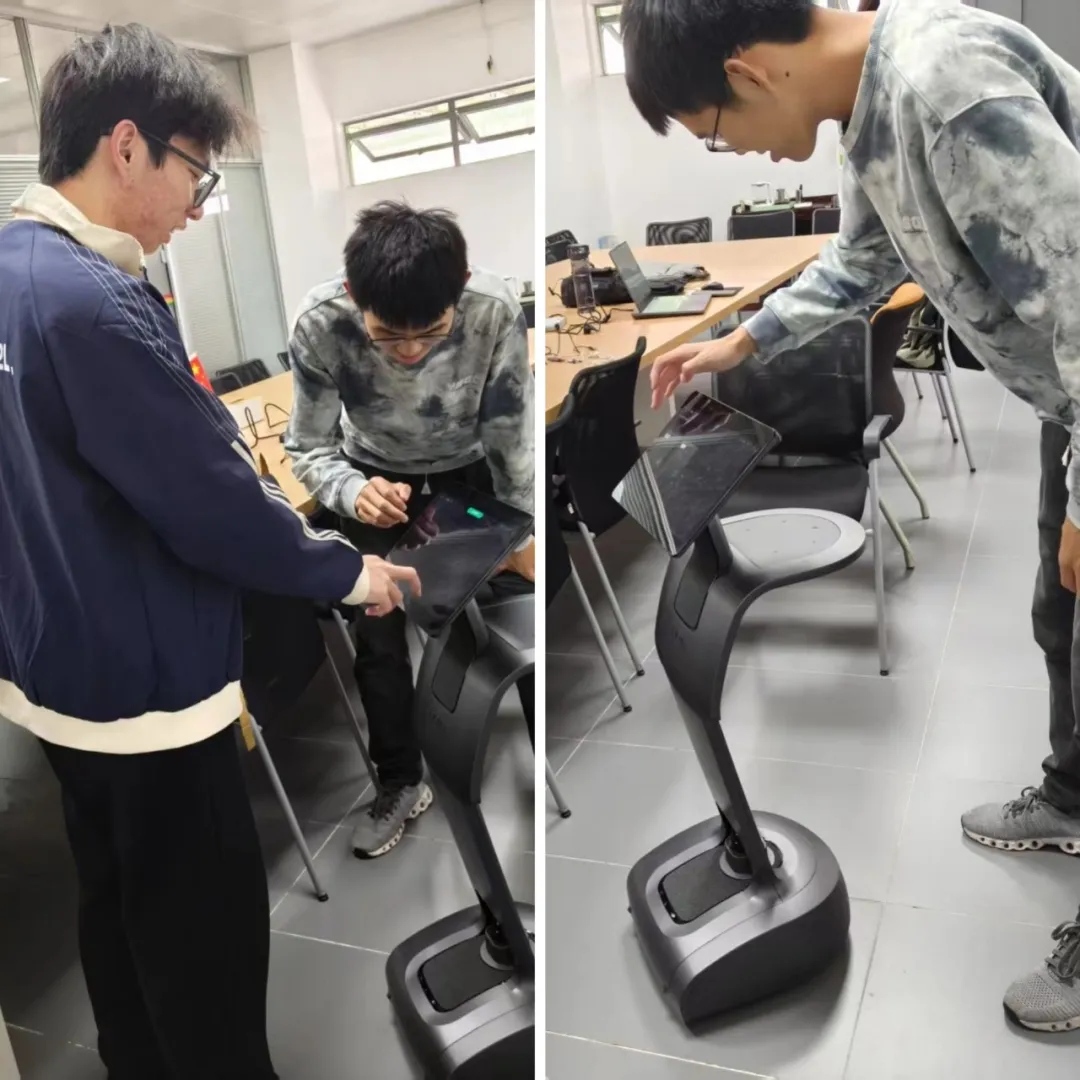
Recently, the Aika smart service robot project (short for AI Key Assistant, known in Chinese as “Aika” and nicknamed “Kaka”), jointly carried out by Shenzhen Information Vocational and Technical University and weida Company, was successfully completed.
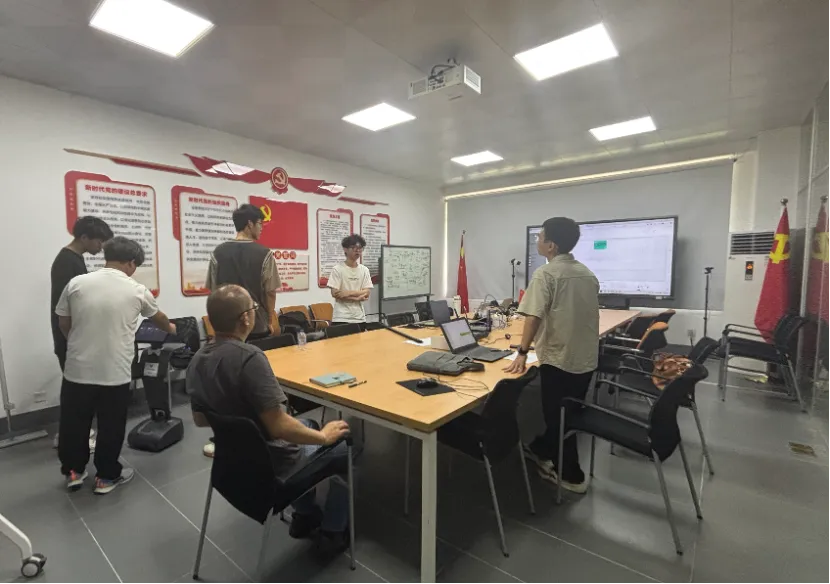
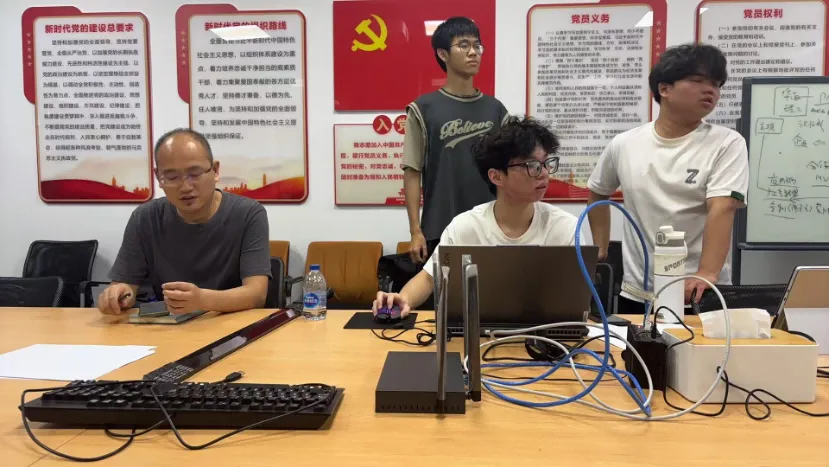
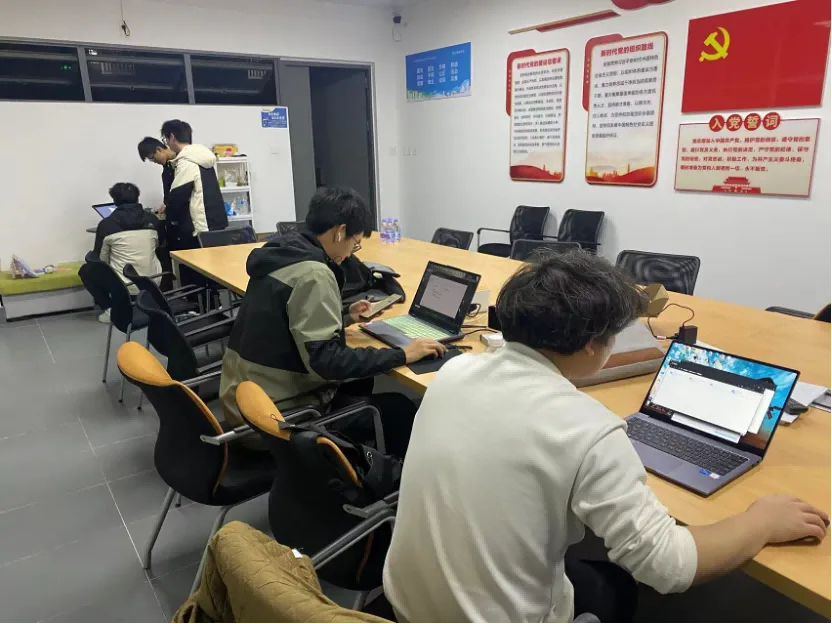
Under the collaborative guidance of Advisor Liu Zhuochen and Professor Hu from the School of Information, along with weida General Manager Xie Yifei and technical support staff Lin Xiaosheng and Li Jianlin, the student team—led by Team Leader Pan Guangyuan and Deputy Team Leader Lu Junzhi, and comprising Tang Jianan, Chen Jihai, Qiu Yuxing as members. Over the course of more than three months, the team completed the entire practical process—from requirements analysis to functional validation—and delivered interim results that showcased both technical innovations and practical insights.
1. ONE
Why Choose the School of Information Science? — A Mutual Alignment of a Practical Ethos and a Fertile Ground for Innovation
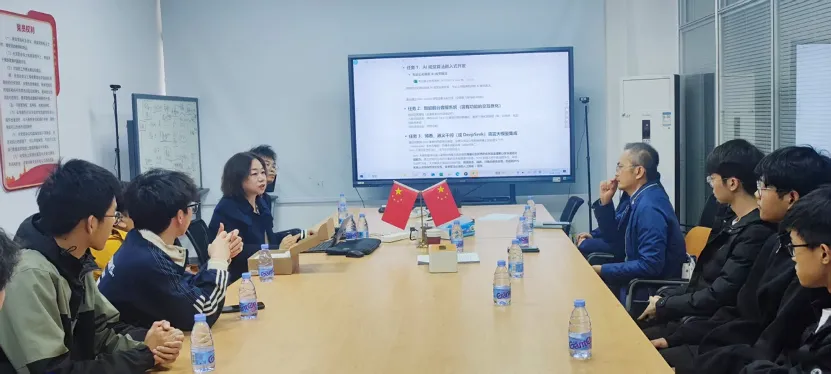
The collaboration between the School of Information Science at Shenzhen Information Vocational and Technical University and weida stems from both parties’ shared commitment to “technical practice” and “talent development.” The school’s educational philosophy of “practice-based learning and industry-education integration” aligns closely with weida’s need for technological exploration in the field of service robots, serving as the core driving force behind this partnership.
The college’s curriculum is closely aligned with industry needs; fields such as artificial intelligence and robotics are highly compatible with the “Kaka” project’s technology stack, enabling student teams to complete the entire practical process—from requirements analysis to functional implementation—within three months.
The team of mentors excels at transforming corporate challenges into teaching cases: faced with hardware limitations in AI vision algorithms, they guided students to innovate a “external algorithm box + network transmission” solution that both solved the problem and developed their skills. Student teams even took the initiative to expand the guided tour functionality, demonstrating practical innovation that went beyond the assignment requirements.
This “university-industry collaboration” model achieves complementary resource sharing, ultimately resulting in a win-win situation where “companies gain results and students gain growth.” The versatile professionals it cultivates—who “understand technology and can implement it”—are precisely the collaborative forces most needed in this era of rapid technological iteration. In the future, the exploration of new applications such as emotion recognition and interactive entertainment by both parties is highly anticipated.
2.TWO
Why Choose “KaKa”? — Dual Value: From Learning to Practice
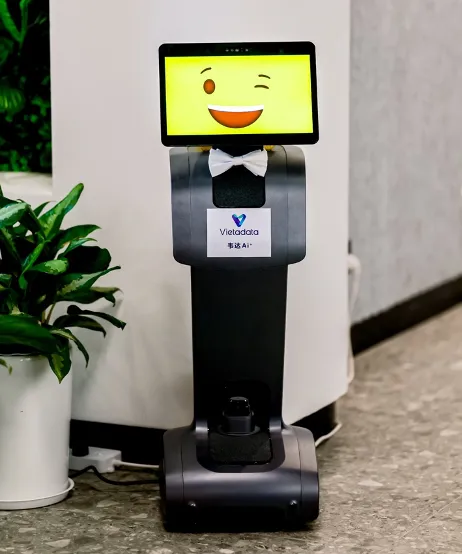
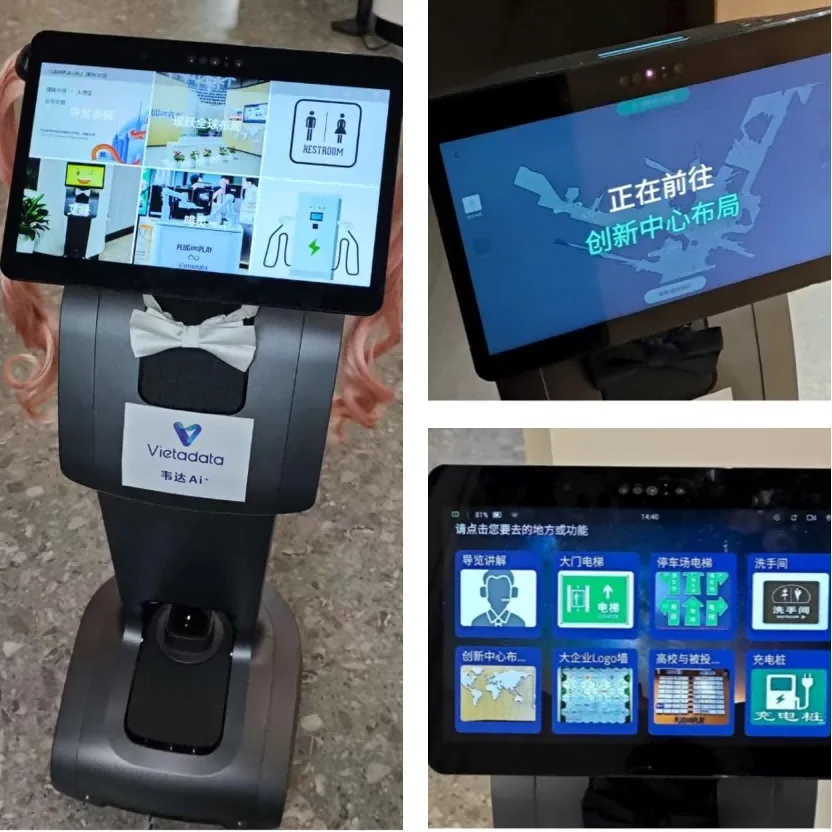
“KaKa” is a “treasure trove of a platform” in its own right—it features autonomous mobility, modular hardware, and an open software ecosystem, integrating a variety of sensors and navigation systems. It is adaptable to multiple scenarios, such as office and educational settings, while also supporting Android development and cloud-based management. For student teams, this is not only a “research subject” but also a “platform for hands-on practice”: through development, they can gain a deep understanding of service robots’ hardware architecture and vision algorithms, while also mastering the full-process methodology—from requirements design to testing and deployment.
3. THREE
Tackling Three Major Goals: Achievements and Breakthroughs
· AI Vision Algorithms: Streamlining the Recognition Process and Implementing Inspections via an Alternative Solution
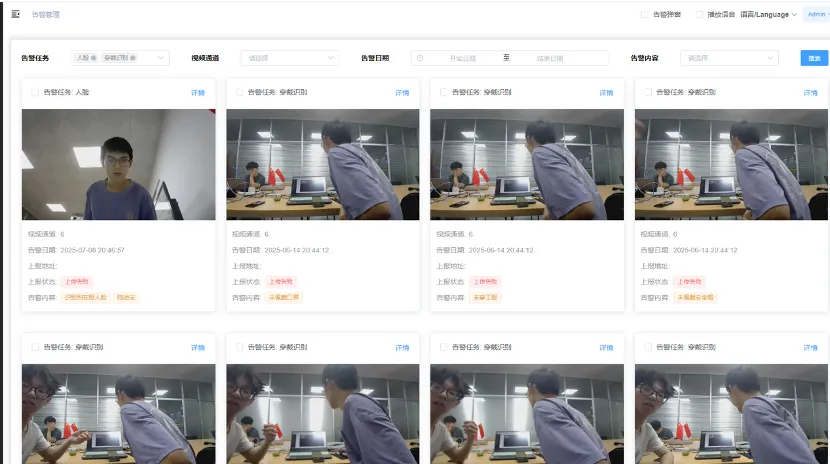
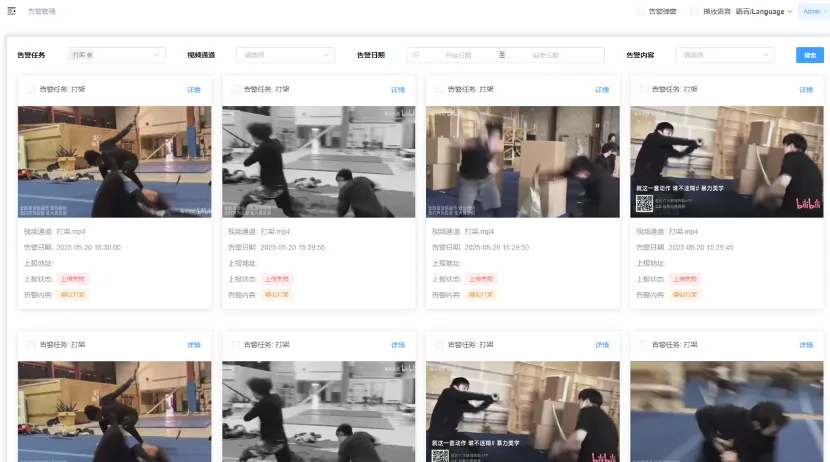
The goal was to integrate AI vision algorithms into the robot to enable real-time scene recognition via a camera. The team first cleared the “foundational hurdle”—successfully acquiring video streams from the “KaKa” camera and completing AI recognition; however, they encountered a hardware challenge: limitations in the robot’s power transmission and video stream reading capabilities prevented the algorithm module from being directly embedded.
Undeterred, the team shifted to an alternative solution using an “external algorithm box + network transmission” approach: the box retrieves and processes the “Kaka” video stream over the network, which, combined with the robot’s autonomous navigation capabilities, ultimately enabled automated inspections of specific areas. Although “embedded integration” was not achieved, this flexible approach allowed the functionality to be implemented first.
Smart Front Desk Customer Service: Not Just Meeting Goals, but Gaining “New Skills”
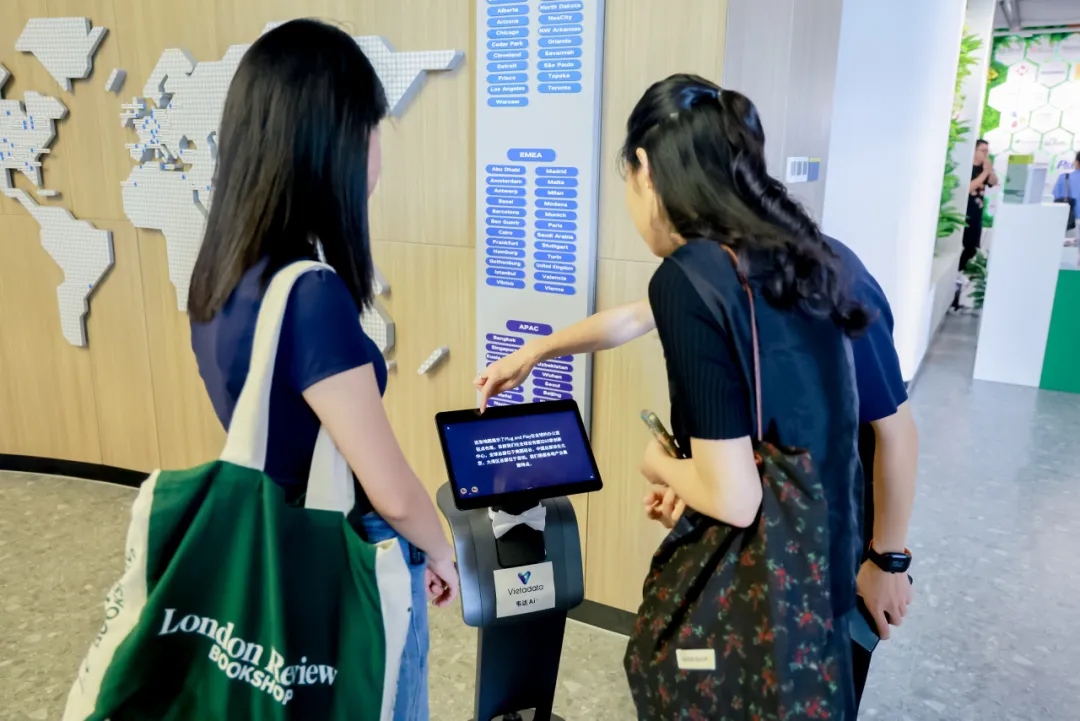
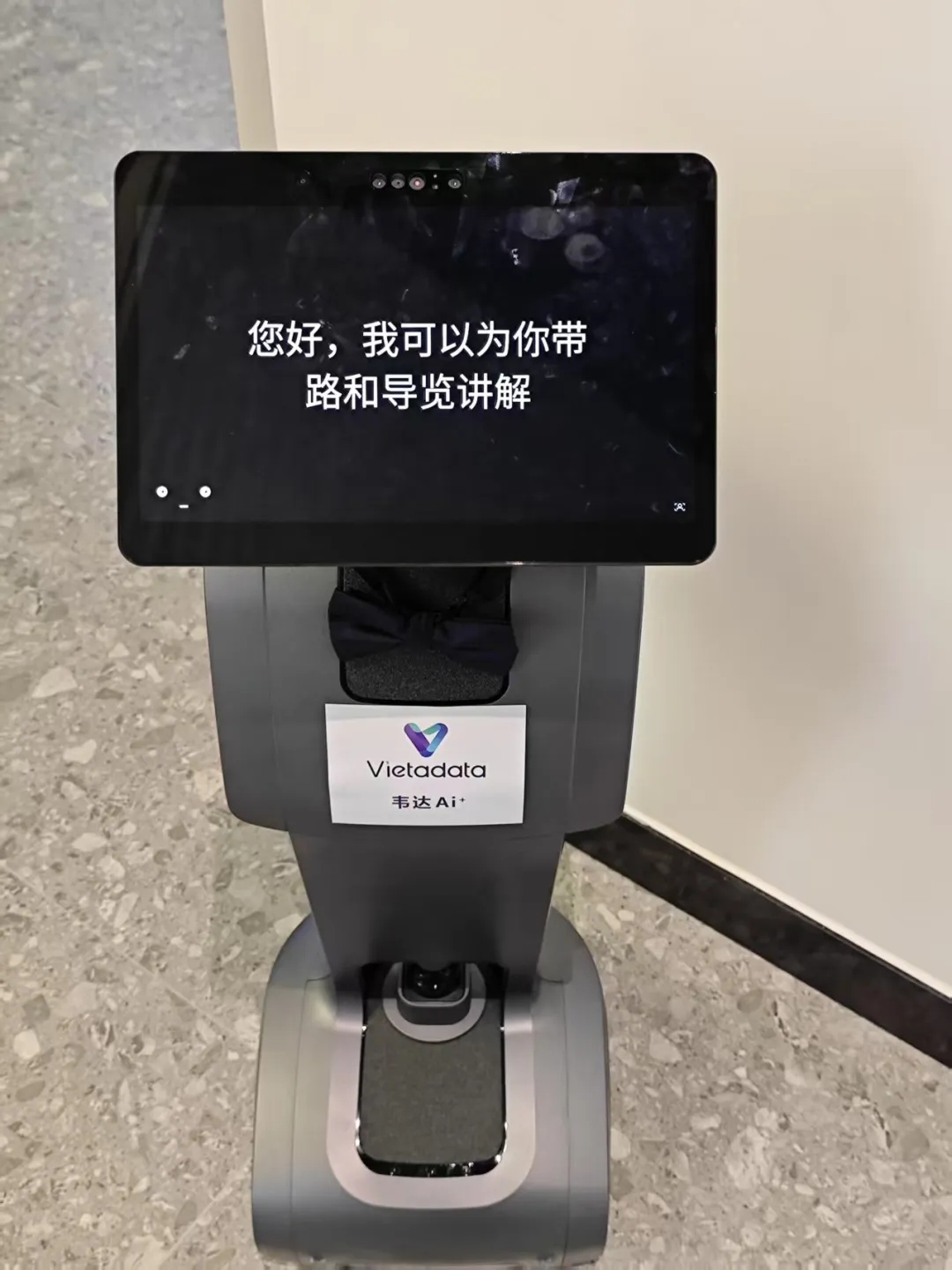
This is one of the project’s most impressive achievements. The team not only delivered the three core features as planned—
1. Automatic Greeting: Proactively triggers a greeting upon arrival, with body language making it seem more natural;
2. Facial Recognition Greeting: Compares against a preset facial database and greets regular visitors with personalized messages such as, “Hello, Mr./Ms. XX, would you like me to escort you to your office?” —
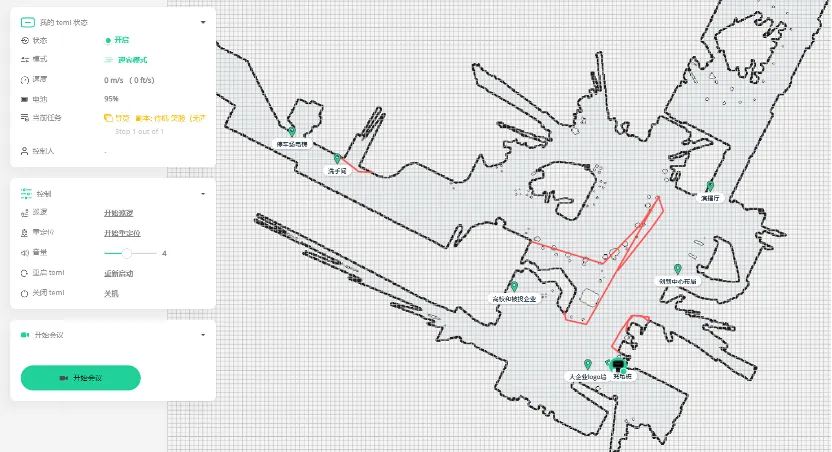
3. Dynamic Route Planning: When a visitor says, “Take me to the conference room,” the robot automatically avoids obstacles and provides precise directions;
The team also developed an additional “Guided Tour” feature: by pre-entering location information (such as campus landmarks or exhibition booths), the robot can patrol along designated routes.
Large Language Models: Basic Interaction Is Achieved, but Further Challenges Remain
We originally planned to integrate a large language model (by connecting to DeepSeek or Tongyi Qianwen) to enable the robot to better understand natural language. We have now completed the “Basic Version,” which allows for simple voice conversations and supports custom Q&A training (such as pre-setting fixed answers like “library opening hours”).
However, due to the lengthy SDK integration process, full integration of the large language model has not yet been completed. Nevertheless, the team has a clear direction: the next step will focus on resolving interface issues and building a local knowledge base, enabling the chatbot to handle more complex conversational scenarios.
3. THREE
What We Gained from the Project Goes Beyond Technology
For the student team, the value of these three months went far beyond simply “building features”:
1. When faced with hardware limitations, they learned not to “get bogged down in details”—replacing embedded integration with an external box demonstrated flexible “problem-solving” thinking;
2. Moving from “completing tasks” to “proactive innovation”—adding a navigation feature to the customer service system demonstrates a keen understanding of “user needs”;
3. When faced with unmet goals, they clearly documented “sticking points,” leaving ample clues for future breakthroughs—this reflects the rigorous attitude expected in scientific research.
4. FOUR
Even More Possibilities Lie Ahead: Robots Are Set to Become “Jack-of-All-Trades”
Although the project has come to a close, the team has already mapped out new directions:
1. Emotion Recognition: We want the robot to “understand” facial expressions—sending well-wishes when someone is happy and telling jokes when they’re sad (we’re currently researching camera integration solutions);
2. Interactive Entertainment: Adding mini-games like jigsaw puzzles and Sudoku to make the robot the “life of the party” at events;
3. Scenario Expansion: Experimenting with roles such as event host (delivering scripted announcements according to the agenda) and serving water during meetings, bringing the robot closer to real-world needs.
From “following a blueprint” to “proactive innovation,” and from “technical implementation” to “scenario-based thinking,” this “KaKa” robot project serves not only as a practical course in AI technology but also as a growth story that seamlessly integrates learning with application. While some goals may remain unfulfilled, these young people have proven through their actions that on the path of technological exploration, every step of solid practice is a starting point for moving toward “something better.”
“Kaka” is one of the main members of our robot family. To learn more about the other members, please stay tuned.