

 Return
Following the implementation of 136 general-purpose algorithms, we are now introducing vertical, specialized algorithms designed for smart logistics parks. This update is fully tailored to the actual operational scenarios of these parks, integrating AI into core areas such as traffic management, security, and personnel management, ensuring that the algorithms address specific needs.
The algorithms include:
|
Wall climbing |
Random vehicle parking |
|
Vehicle speed detection |
Channel congestion |
|
Smoke and flame recognition |
Sleeping on duty / Leaving post without permission |
|
Person falling down |
Personnel smoking |
I. Perimeter and Fire Safety: Safeguarding the Park’s “First Line of Defense”
Perimeter Climbing Detection: Covers the entire perimeter of the park, monitors unauthorized climbing in real time, and issues alerts upon detection.
Smoke and Fire Detection: Precisely detects open flames and smoke in critical areas such as warehouses and loading/unloading zones, responding within seconds to buy time for initial response.
II. Traffic Order Management: Ensuring “Smooth, Congestion-Free” Campus Roads
Illegal Parking Detection: Monitors for illegal parking along main roads, fire lanes, and around loading docks.
Vehicle Speed Monitoring: Monitors vehicle speeds in real time on main roads and at turns, issuing alerts for speeding violations.
Traffic Congestion Detection: Automatically monitors congestion-prone areas such as entrances, exits, and intersections to facilitate rapid traffic flow.
III. Personnel Behavior Standards: Strengthening “Personnel and Post Safety” in the Park
Duty Absence Detection: Real-time monitoring of on-duty status for key positions such as security, warehousing, and operations.
Person Fall Detection: Covers the entire area, including work zones and passageways, to automatically detect abnormal falls and push alerts.
Smoking Detection: Accurately identifies smoking behavior in no-smoking areas to issue timely warnings and intervene.
This algorithm suite is designed to tailor AI to the practical needs of logistics parks, driving a shift in management from “reactive response” to “proactive intervention.” It enables millisecond-level detection, intelligent analysis, and closed-loop handling of violations, anomalies, and risks, and can be seamlessly integrated into existing workflows.
We will continue to release modular, scenario-based algorithms that focus on the specific needs of park operations, steadily empowering every stage of the process and helping to build a smart park that is “predictable, decision-ready, and controllable.”
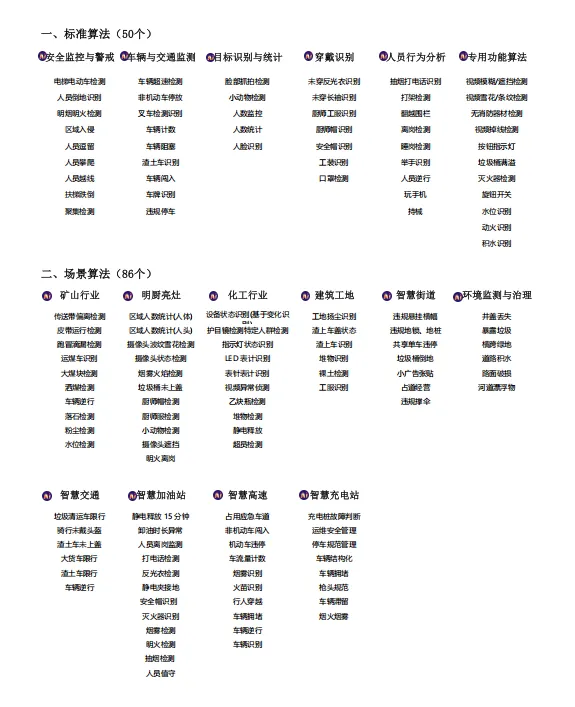
Appendix: List of released standard algorithms (136+), for reference.