


 Return
Tech Perspectives|From Seeing to Understanding: Vietadata’s Insights at an International Innovation Forum
Release Time:2026year07month03day
Page View:133
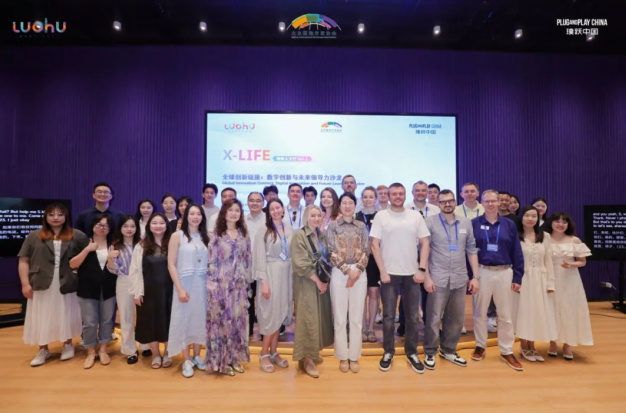
On June 25, Weida attended a salon hosted by Plug and Play China Greater Bay Area International Innovation Center, themed Global Innovation Connections: Digital Innovation and Future Leadership. The event brought together young Russian innovators as well as Chinese and Russian entrepreneurs with deep expertise across diverse industries.
We brought two highlights: a presentation on AI Vision technology, and a robot that can print portraits onto coffee in real time.
In this article, we would like to share what we saw, discussed and experienced at the event, along with the key insights we reaffirmed through these interactions.
ONE
When Computing Power, Materials and Organizational Systems Start Telling the Same Story
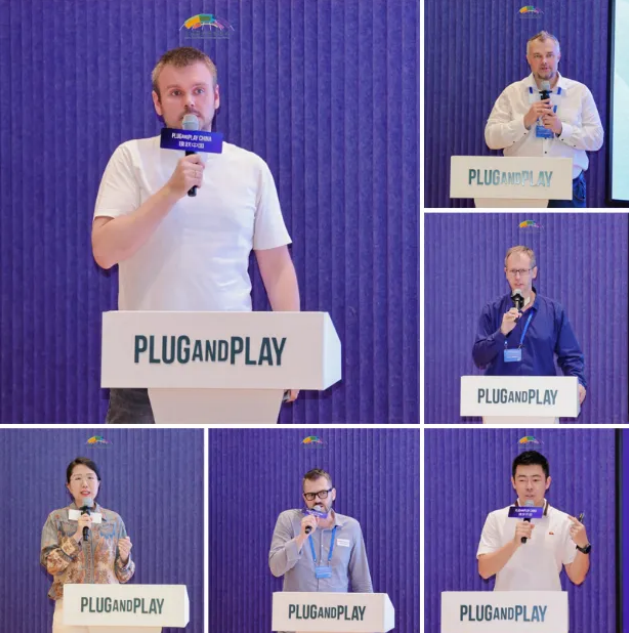
The speakers came from diverse fields including digital computing power, new materials, and AI recruitment. Their topics seemed unrelated at first glance. Yet after listening to all the sharing, we spotted a subtle common thread:
Computing power is being scheduled and optimized, data is being structured, and AI is being systematically embedded into the operations of organizations and cities.
Though coming from different directions, all these efforts point to one fundamental shift:
Technology is evolving from a "functional tool" to become foundational infrastructure.
It is no longer merely something we use, but something that shapes how the world functions.
This trend aligns with Weida’s long-standing core insight: The physical world is generating massive volumes of visual data. Cameras across cities, industrial parks, logistics networks, factories and warehouses continuously produce video footage every day. However, most of this video data is only recorded, stored and played back — never truly understood.
TWO
AI Vision: From "Seeing" to "Understanding"
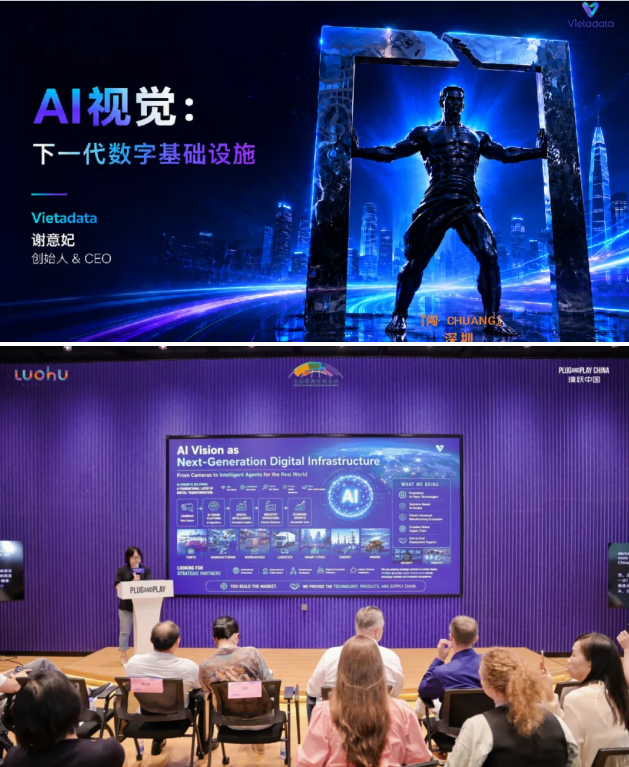
The cover slide of Weida’s presentation featured an image of the landmark sculpture Chuang (The Pioneer), a symbol of the spirit of Shenzhen.
No lead-in, no extra explanation — just this image embodying the essence of Shenzhen.
It was not merely a gimmick for memorability. Rather, it reflects the core ethos of Weida: to keep exploring amid uncertainty, forge ahead amid constant change, and find answers through real-world practice.
Moving to the core topic, Xie Yifei, Founder and CEO of Weida, shared a conviction the team holds more firmly than ever:
AI Vision is becoming a critical building block of the next generation of digital infrastructure.
This viewpoint stems from Weida’s consistent core insight: cameras record the world, while AI Vision understands it.
Traditional surveillance systems only achieve basic "seeing", whereas AI Vision enables true "understanding".
Cameras are already ubiquitous, yet most of the time they only record footage, without meaningful comprehension.
What Weida is building enables AI to identify, analyse and understand people, vehicles, objects, behaviours and risks in real physical scenarios.
It interprets behavioural relationships within spaces, the logic of environmental changes, and how the physical world connects with digital systems.
Vision should not just be a raw data input — it ought to be AI’s primary sensory modality for understanding the real world.
THREE
Another Reality On-Site: Technology Is Experienced, Not Just Viewed
Equally memorable as the keynote speech was another vivid moment at the event.
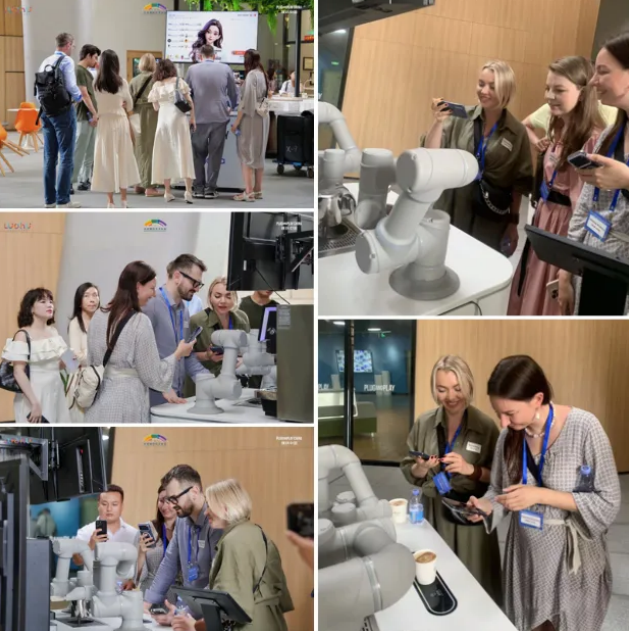
Weida’s coffee robot ran continuously throughout the salon, offering an interactive experience for guests. For many attendees, it was their first time seeing their own portraits printed onto coffee in real time.
Their reaction was not merely watching technology from a distance, but stepping directly into the experience: moving from curiosity to surprise, and then to a genuine sense of participation.
At that moment, technology ceased to be an abstract concept and became something tangible to feel. This is essentially what Weida has always strived for — not just talking about the potential of AI, but letting people truly touch it in everyday moments.
After the event, we left with a question that we are still pondering to this day:
As AI becomes part of foundational infrastructure, how should we rethink the way the physical world is perceived?
This is exactly what Weida has been pursuing through AI Vision: shifting from mere observation to deep understanding, and transforming raw video data into intelligent management of the real world. We will keep exploring and gradually find answers through real-world applications.